Structured Cabling and Infrastructure
A structured cabling system is made up of smaller subsystems of cabling and hardware. Each subsystem works together to form a complete telecommunications infrastructure.
A structured cabling system comprises various subsystems of cabling and hardware, each collaborating to establish a comprehensive telecommunications infrastructure.
Structured cabling is vital for organizations seeking enhanced performance, particularly in expansive settings like entire buildings or sprawling campuses. Most structured cabling systems have 3 components:

Structured Cabling System Components
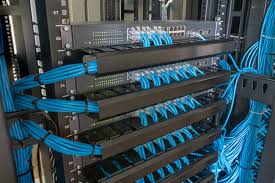
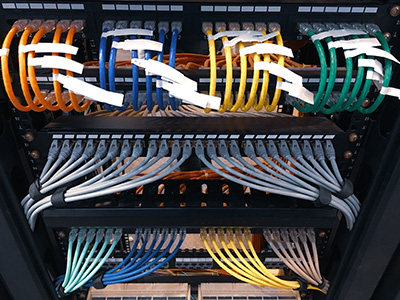
Patch Panels
Patch panels connect cables, cords, and switches. You can think of these like the ultimate connection hub. They bundle all the connections to another network and you can usually find them in data centers.
Switches
Switches send, receive, and process data. This is how information gets shared across the Internet. Switches connect to patch panels and connect devices to the network.
Trunk Cables
Trunk cables also connect to patch panels. They group wires together to keep everything organized, consolidated, and neat.
Most Common Types of Cable
Fiber Optic Cable
These cables are like electric cables but they carry signals through optical fibers. Optical fibers are made from silica or plastic. And they’re coated with even more layers of plastic around the inside. These are utilized for:
- Network Reliability
- Long-Distance Communications
- High-Speed Connections
Twisted Pair Cable
There are two types of twisted pair cable: shielded and unshielded. Shielded twisted pair cable (SPT) wraps individual wires in foil. Unshielded twisted pair cable (UTP) twists wires together and wraps them in tubing. These are utilized for:
- Connects businesses to phone companies
- Telephones and computer networks usually use UTP
- Dates back to radio and telegram
Select Cable, Patch Panel, and Switch Manufacturers used by Key Technologies